Your Daily Dish

Feeding Outrageous to you Daily

Hide Advertisement
  • Animals
    • Farm
    • Pets
    • Zoo
    • Wildlife
  • Family
    • Grandparents
    • Kids
    • Parents
  • Health
    • Exercise
    • Food
    • Medical
  • Humor
  • Lifestyle
    • News
    • Science & Tech
    • Travel
  • Videos
Site logo
ADVERTISEMENT
ADVERTISEMENT
Apple

40 Years Ago, NASA Put a Disco Ball in Space and It’s Still Floating Up There
By Jason Owen 2 min read
  • # Earth
  • # Goddard Space Flight Center
  • # LAGEOS
Advertisement - Continue reading below
Source: NASA's Goddard Space Flight Center
Source: NASA’s Goddard Space Flight Center

For four decades, outer space has had some serious Saturday Night Fever.

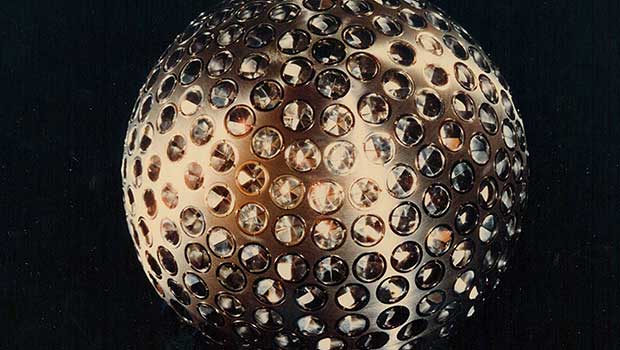
On May 4, 1976, NASA scientists launched the LAGEOS satellite – short for Laser Geodynamics Satellite – from Vandenberg Air Force Base in California. For such an unassuming satellite, the LAGEOS would turn out to completely transform how scientists gathered data about the Earth, which had nothing to do with dancing.

Advertisement

The structure is simple compared to most NASA satellites. From Space.com:

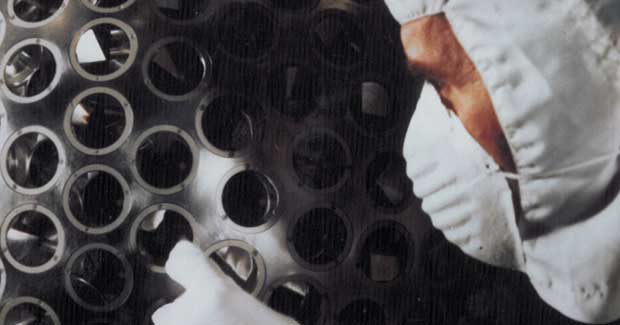
“The 900-pound (408-kg) satellite has no onboard sensors, electronics or moving parts; it’s simply a brass core surrounded by an aluminum shell that’s covered in 426 retroreflectors.

“The retroreflectors, which reflect light with minimal scattering, made LAGEOS the first NASA orbiter to use a technique called laser ranging to take measurements. By sending light to LAGEOS and measuring how much time it took that light to bounce off the reflectors and make it back to Earth, NASA scientists could make measurements to millimeter-level precision of how far away LAGEOS was from the ground.”

Before LAGEOS, “laser-ranging” technology could only measure distances from the Earth’s surface to a satellite’s orbit – 3,600 miles above the Earth – to within an accuracy of three feet. LAGEOS brought that margin of error down to within half an inch.
Source: NASA's Goddard Space Flight Center
Source: NASA’s Goddard Space Flight Center

Perhaps LAGEOS’ largest contribution to scientific research came in the ability to measure “small shifts in the Earth’s rotation that are caused by movement of mass in the atmosphere and oceans” as tectonic plates shift and move, Space.com wrote. In other words, LAGEOS has provided a whole new understanding on earthquakes.

“What had been missing was a way to measure the speed and direction of plate movement over time,” said Frank Lemoine, a geophysical scientist at NASA’s Goddard Space Flight Center.

In 1992, NASA launched LAGEOS-2, a sister satellite traveling in a complementary orbit to LAGEOS-1, which would help prove one of the predictions Einstein made in his general theory of relativity.

The two satellites together allowed a greater accumulation of data that showed small fluctuations in the satellites’ orbits aligned with a “frame-dragging” effect (essentially, that Earth’s spin warps space-time around it and “drags” nearby objects inward) that is lowering LAGEOS’ orbit by approximately one millimeter per day.

So, that big shiny disco ball in our night sky is going to keep on spinning until the “drag” brings it back down to Earth… in roughly 8.4 million years or so. Talk about a long Saturday night.
(h/t Space.com)
Advertisement - Continue reading below

4 Crafting Staples to Make Spooktacular DIY Halloween Decorations
Lifestyle
Melanie Weir 2 min read

4 Crafting Staples to Make Spooktacular DIY Halloween Decorations

Virginia Reporter, Cameraman Killed On Live TV
News
Jason Owen 1 min read

Virginia Reporter, Cameraman Killed On Live TV

Mom’s Devastating Facebook Tribute to Daughter Goes Viral
Trending
Brian Delpozo 3 min read

Mom’s Devastating Facebook Tribute to Daughter Goes Viral

Emma Roberts and Evan Peters break off engagement
Entertainment
Sara Wilkins 1 min read

Emma Roberts and Evan Peters break off engagement

Orlando Nightclub Survivor Joshua McGill Hailed as Hero
News
Lauren Boudreau 3 min read

Orlando Nightclub Survivor Joshua McGill Hailed as Hero

This One Thing Is 12,000-Times More Likely to Harm You Than Terrorism
Apple
Jason Owen 2 min read

This One Thing Is 12,000-Times More Likely to Harm You Than Terrorism

Cork Airport Tries to Reunite Missing Pink Teddy Bear With Owner
Lifestyle
Steven Lerner 3 min read

Cork Airport Tries to Reunite Missing Pink Teddy Bear With Owner

11-Year-Old Boy With Autism Wins World Taekwondo Title
Lifestyle
Valerie Cools 2 min read

11-Year-Old Boy With Autism Wins World Taekwondo Title

Watch This Book-Crazy Baby Burst Into Tears Every Time Mom Finishes the Story
Kids
Brian Delpozo 1 min read

Watch This Book-Crazy Baby Burst Into Tears Every Time Mom Finishes the Story

Daniel Radcliffe Goes Undercover to Stop Neo-Nazi Terrorists in ‘Imperium’ Trailer
Entertainment
Mauricio Castillo 1 min read

Daniel Radcliffe Goes Undercover to Stop Neo-Nazi Terrorists in ‘Imperium’ Trailer

Mom Teaches Boxer to Tickle Crying Baby on Command Eliciting Uncontrollable Giggles
Lifestyle
Jason Owen 1 min read

Mom Teaches Boxer to Tickle Crying Baby on Command Eliciting Uncontrollable Giggles

WATCH: Fiona the Hippo Photobombs Couple’s Proposal
Animals
Margo Gothelf 2 min read

WATCH: Fiona the Hippo Photobombs Couple’s Proposal

Subscribe to our newsletter

* indicates required

sidebar

ADVERTISEMENT
Latest

Surprised Fans Join Adele Onstage To Sing After They Brought Her to Tears
Entertainment
Margo Gothelf 2 min read

Surprised Fans Join Adele Onstage To Sing After They Brought Her to Tears

Entire Auditorium of Middle Schoolers Help Autistic Boy Sing ‘Let it Go’ at Talent Show
Lifestyle
Lauren Boudreau 1 min read

Entire Auditorium of Middle Schoolers Help Autistic Boy Sing ‘Let it Go’ at Talent Show

Cute Kitten Stands on Hind Legs to Show Off New Knit Bow Tie
Animals
Jason Owen 1 min read

Cute Kitten Stands on Hind Legs to Show Off New Knit Bow Tie

Subscribe to our newsletter

* indicates required
ADVERTISEMENT

sidebar-alt

  • About
  • Contact Us
  • Terms of Service
  • Privacy Policy
  • For Advertisers