Your Daily Dish

Feeding Outrageous to you Daily

Hide Advertisement
  • Animals
    • Farm
    • Pets
    • Zoo
    • Wildlife
  • Family
    • Grandparents
    • Kids
    • Parents
  • Health
    • Exercise
    • Food
    • Medical
  • Humor
  • Lifestyle
    • News
    • Science & Tech
    • Travel
  • Videos
Site logo
ADVERTISEMENT
ADVERTISEMENT
Apple

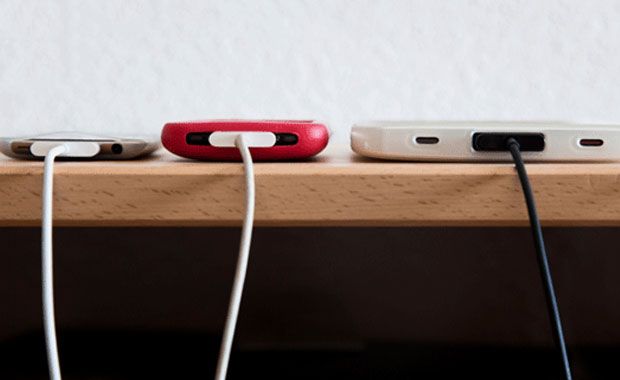
Amazing Lab Accident May Have Created Lifetime Cell Phone Battery
By Nick Nunez 3 min read
  • # Android
  • # batteries
  • # battery
Advertisement - Continue reading below
Credit: PC Advisor
Credit: PC Advisor

Usually stories involving lab accidents end with “hundreds dead” in the title or a once totally rational and brilliant scientist turning mad and deciding to use their new powers to crush Spider-Man (because why not?).

But UC Irvine researcher Mya Le Thai is changing all of that with perhaps the most exciting accidental lab discovery since champagne: a cell phone battery that could last a lifetime.

Advertisement

Anyone who has had a smart phone in their lives knows the experience of feeling like their battery just doesn’t seem to hold the same charge that it once did. In fact, your phone’s battery always seems to start to sputter out right when your carrier is pushing you to make another expensive upgrade. This isn’t your imagination or a conspiracy theory. Lithium ion batteries tend to start to die out between 500 and 1,500 charge cycles—that is, the amount of times your battery is drained and then recharged.

Researchers thought they found a solution to this issue with nanowire-based batteries. These batteries are thousands of times thinner than a human hair, making it ideal for thin phones, and are highly conductive. The only problem is that they are incredibly fragile and they die between 5,000 and 7,000 charge cycles.
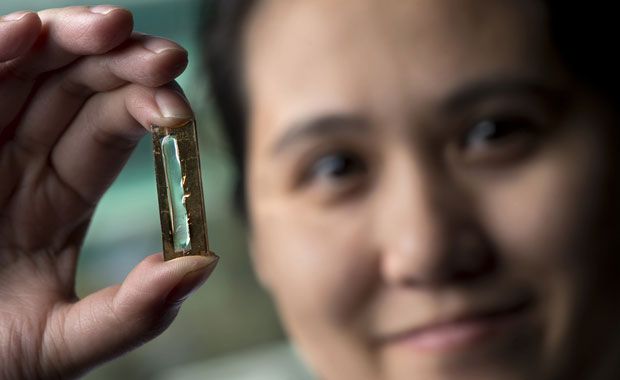
Credit: Steve Zylius/UCI

Thai started to play around with the nanowires when she made a discovery that shocked her fellow researchers. By coating the gold nanowires in a manganese dioxide sheath, doing away with liquid lithium, and surrounding the manganese with a dense electrolyte gel, she was able to both protect the fragile wires as well as dramatically increase the battery’s efficiency after many, many cycles.

“She discovered that just by using this gel, she could cycle it hundreds of thousands of times without losing any capacity,” said Reginald Penner, a lead author of a paper of the research, told IBTimes.

Since coating the wires with her gel, Mya Le Thai has charged and discharged the battery over 200,000 times without losing any battery capacity or breaking the wires.

“The coated electrode holds its shape much better, making it a more reliable option,” Thai said. “This research proves that a nanowire-based battery electrode can have a long lifetime and that we can make these kinds of batteries a reality.”

While smart phones are typically traded in well before their batteries become dangerous, traditional lithium batteries in longer-lasting electronics such as laptops are prone to corrosion after multiple charge and discharge cycles. Thai’s discovery creates a promising new alternative to these batteries which can be helpful to consumers, electronics, and the environment. Many are excited about other applications for this new discovery, such as cars and spacecraft, but we all know that you just want to keep scrolling through Instagram and Your Daily Dish while having enough juice to play Candy Crush. No worries, we’re not judging.

If you want to hear Mya Le Thai explain her discovery in her own word, or if you just want to check out her enviable NASA t-shirt, check out the video below:

https://www.youtube.com/watch?v=lzFzBpwl8aU
Advertisement - Continue reading below

John Stamos discharged from hospital
Entertainment
Sara Wilkins 1 min read

John Stamos discharged from hospital

He Lost Touch With 5 Close Friends. Now He’s Apologizing With Big Messages of Love.
Lifestyle
YDD Contributor 2 min read

He Lost Touch With 5 Close Friends. Now He’s Apologizing With Big Messages of Love.

Stray Kitten Crashes Live Newscast
Trending
Brian Delpozo 2 min read

Stray Kitten Crashes Live Newscast

‘Donkey Whisperer’ Helps Create Tech That Translates Braying Into Speech
Apple
Valerie Cools 2 min read

‘Donkey Whisperer’ Helps Create Tech That Translates Braying Into Speech

Cristiano Ronaldo Is Stupid-Good At Soccer
Videos
Ryan Miller 1 min read

Cristiano Ronaldo Is Stupid-Good At Soccer

Will Ferrell and Amy Poehler Are at Their Best in Hilarious First Trailer for ‘The House’
Apple
Jason Owen 1 min read

Will Ferrell and Amy Poehler Are at Their Best in Hilarious First Trailer for ‘The House’

Mom’s Comical Rules Keep Unauthorized Family Members From Turning Up Thermostat
Lifestyle
Margo Gothelf 1 min read

Mom’s Comical Rules Keep Unauthorized Family Members From Turning Up Thermostat

‘The Simpsons’ Will Premiere an Hour-Long ‘Great Gatsby’ Episode Next Year
Apple
Brian Delpozo 2 min read

‘The Simpsons’ Will Premiere an Hour-Long ‘Great Gatsby’ Episode Next Year

Stray Dog Found a New Home When He Joined a 155-Mile Race
Lifestyle
Margo Gothelf 2 min read

Stray Dog Found a New Home When He Joined a 155-Mile Race

Man’s Quick Thinking Saves Dog Who Was Caught on Wrong Side of Elevator
Pets
Brian Delpozo 1 min read

Man’s Quick Thinking Saves Dog Who Was Caught on Wrong Side of Elevator

Photographer’s Work Takes the Familiar to Stratospheric New Heights
Entertainment
Jason Owen 3 min read

Photographer’s Work Takes the Familiar to Stratospheric New Heights

Watch This Adorable Kitten Match a Baby Step-for-Step
Lifestyle
Brian Delpozo 1 min read

Watch This Adorable Kitten Match a Baby Step-for-Step

Subscribe to our newsletter

* indicates required

sidebar

ADVERTISEMENT
Latest

These Cuddly Baby Otters Will Make You Fall in Love
Lifestyle
YDD Contributor 2 min read

These Cuddly Baby Otters Will Make You Fall in Love

These Women Planned to Eat Lunch Alone, Until They Found Each Other
News
Jason Owen 2 min read

These Women Planned to Eat Lunch Alone, Until They Found Each Other

40 Million People Might Lose Internet Access On January 1
News
Margo Gothelf 2 min read

40 Million People Might Lose Internet Access On January 1

Subscribe to our newsletter

* indicates required
ADVERTISEMENT

sidebar-alt

  • About
  • Contact Us
  • Terms of Service
  • Privacy Policy
  • For Advertisers